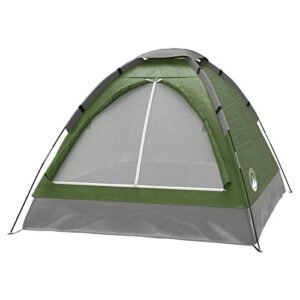
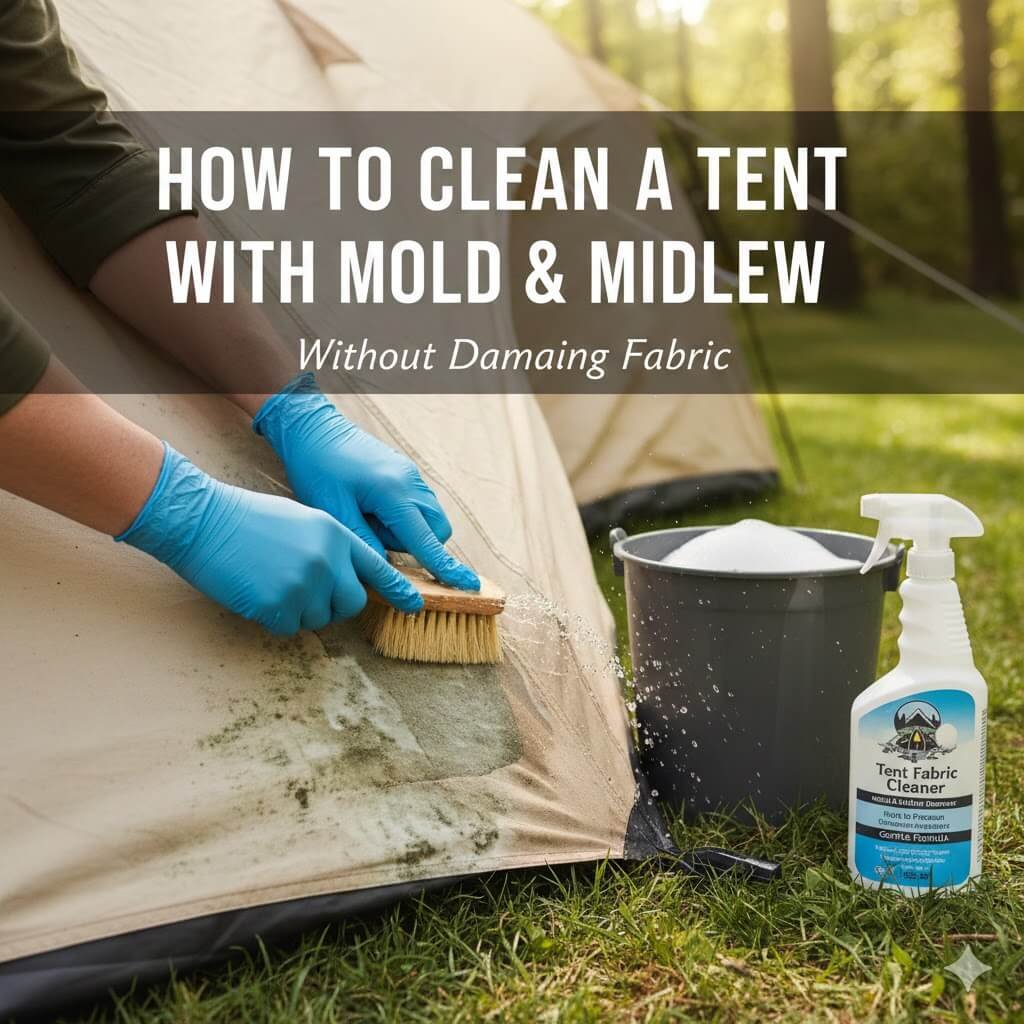
Last July, I pulled my old North Face tent out of the garage in humid Georgia. It smelled like a wet basement and had those ugly black spots all over the rainfly.
I’ve spent years hiking from the damp Appalachian Trail to the rainy Pacific Northwest. I know the gut punch of seeing a $400 piece of gear look ruined. But don’t toss it yet! You can fix this without eating through the waterproof coating if you use the right touch.
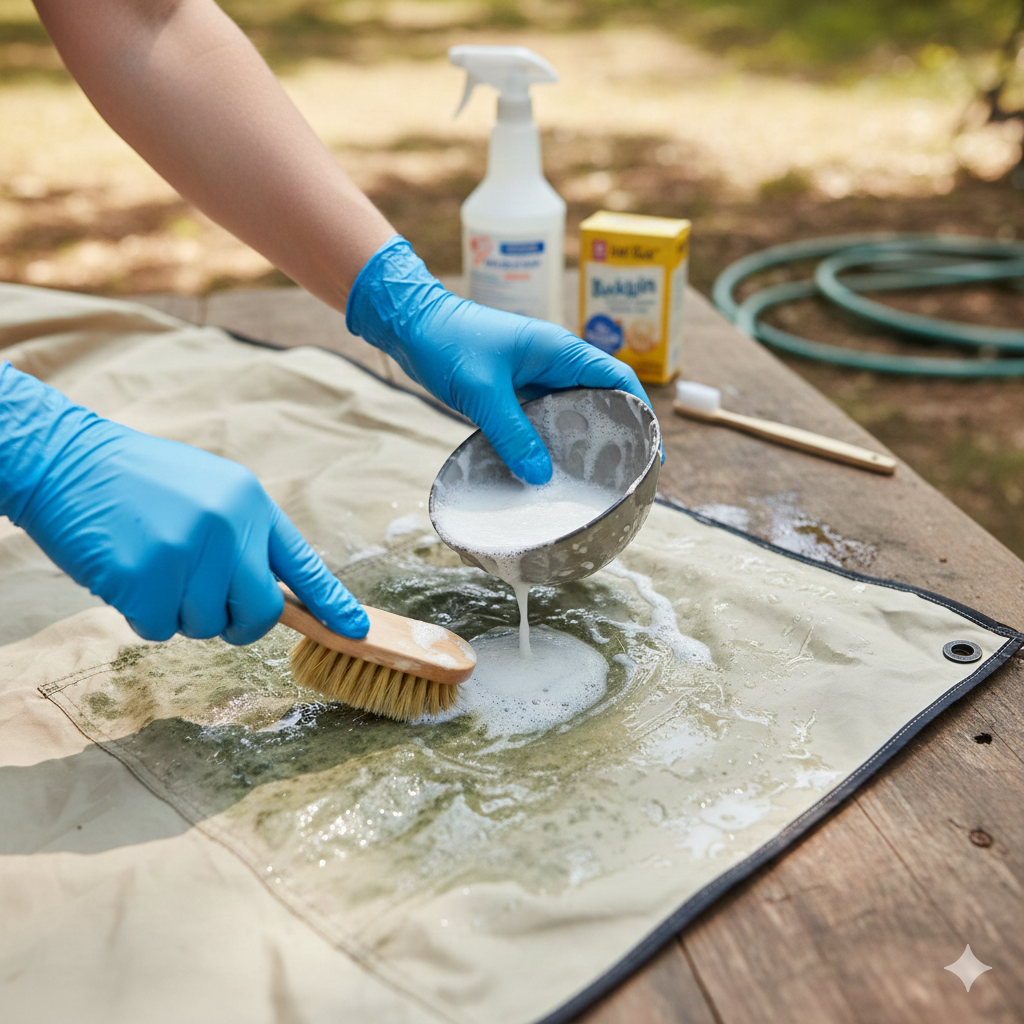
Learning how to clean a tent with mold and mildew without damaging fabric is about being gentle but firm. Most folks reach for harsh bleach, but that’s a death sentence for lightweight polyester or nylon. I’ll show you the exact steps I use to save my gear using simple stuff you probably have under your sink.
Why Mold Loves Your Camping Gear
Mold is a living thing that feeds on the dirt and sweat left on your tent after a long trip. If you pack it away slightly damp after a rainy weekend in the Cascades, you’re basically building a fungus hotel.
The Science of Fabric Damage
Microbes don’t just sit on top of the threads; they try to eat the coatings. Polyurethane (PU) coatings give your tent its “waterproof” rating, but mold can make that layer peel off like a bad sunburn.
Common Signs of Infestation
- The Smell: A funky, earthy odor that hits you as soon as you unzip the bag.
- The Spots: Tiny black, grey, or green dots that don’t rub off with a dry cloth.
- The Feel: A slimy or sticky texture on the inside of the fabric.
Essential Supplies for a Safe Clean
You don’t need fancy industrial chemicals to get the job done right. In fact, the simpler the soap, the better it is for the technical fibers used by brands like REI or Marmot.
Soft Bristle Brush: An old toothbrush or a soft dish brush works great.
Mild Soap: Use something like Nikwax Tech Wash or even just plain Dr. Bronner’s. Avoid dish soaps with degreasers.
White Vinegar: This is my secret weapon for killing spores without melting the seam tape.
Isopropyl Alcohol: Use this sparingly for stubborn spots.
A Large Tub: A backyard kiddie pool or a clean bathtub is perfect.
Step-by-Step: How to Clean a Tent with Mold and Mildew Without Damaging Fabric
Cleaning a tent takes patience, a bit of elbow grease, and a sunny day in the yard. Make sure you have a clear spot on the grass or a clean driveway before you start.
1. The Initial Assessment
Set the tent up fully in your yard. This lets you see every nook and cranny. I like to do this on a Saturday morning so I have the full sun to help me out later.
2. Spot Treat the Heavy Zones
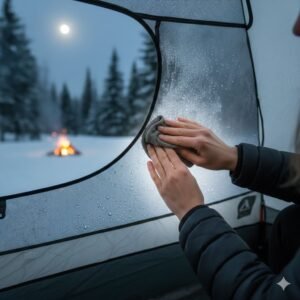
Take a spray bottle with a 50/50 mix of water and white vinegar. Mist the moldy areas lightly. Let it sit for about 10 minutes—I usually grab a coffee while the vinegar does the hard work of killing the spores.
3. The Deep Soak
Fill your tub with lukewarm water and add your mild soap. Submerge the tent completely. Don’t be aggressive; just gently agitate the water with your hands like a slow washing machine.
4. Scrubbing with Care
- Use your soft brush on the visible spots.
- Scrub in a circular motion.
- Avoid the seam tape! If you scrub the tape, it might lift.
- Rinse with a garden hose until all the bubbles are gone.
Drying and Storage: The Pro Secrets
The sun is your best friend and your worst enemy. It kills mold, but too much UV light can make your tent fabric brittle and weak over time.
The Proper Way to Air Dry
Never put a tent in a dryer. Ever. I once saw a buddy melt his favorite Big Agnes tent in a laundromat dryer, and it was a sad sight. Instead, drape it over a fence or a clothesline in the shade.
Why Airflow Matters
Make sure the floor of the tent is bone dry. Flip it inside out halfway through the day. If it feels even a little bit cool to the touch, it’s still damp.
Preventing Future Growth
An ounce of prevention is worth a pound of cure, especially when it comes to expensive outdoor gear. It only takes one mistake to turn a great tent into a science project.
- The 24-Hour Rule: Never leave a tent in its stuff sack for more than 24 hours after a trip.
- Dry Before You Store: Even if it didn’t rain, morning dew is enough to cause mold.
- Store It Loose: Don’t cram it into the tiny retail bag. Use a large, breathable mesh laundry bag or a pillowcase.
- Check Your Garage: If you live in a place like Florida or Houston, store your gear inside the house where it’s climate-controlled.
Frequently Asked Questions
Can I use bleach on my tent?
No! Bleach is too harsh. It will eat the waterproof coating and ruin the fabric. Stick to vinegar or specialized gear cleaners.
Will vinegar damage the tent fabric?
Plain white vinegar is safe for most nylon and polyester. Just make sure to rinse it off well after you finish cleaning.
How do I get the smell out?
A deep soak with an enzyme cleaner like MiraZyme is best. It eats the odor-causing bacteria without hurting the tent.
Can I put my tent in the wash?
Never use a washing machine. The agitator can tear the mesh or pull the seams apart. Always wash by hand in a tub
Is mold on a tent dangerous?
It can be! Mold spores can cause sneezing or lung issues. It is best to clean it outside while wearing a mask.